


PHARMACIST: The Real Reason Your Fatty Liver Won’t Budge (It’s Not Your Liver) And The German Fix For Under $1 A Day.


The lab sheet was on the kitchen table, next to the fruit bowl, with a little “H” printed beside ALT 68.
My daughter walked past, looked at it upside down, and asked what the H meant.
I have spent twenty years explaining lab results to strangers across a pharmacy counter. I had a very good answer for her.

Because I was the pharmacist. I was the one who knew better. And I was also the fatty liver patient who had been doing everything the sheet told her to do for five months, and had nothing to show for it but a coffee ring on the paper.
What I found out three weeks later, from a doctor in Munich who did not want to be quoted, changed what I did next. And it is why I am writing this instead of quietly refilling milk thistle.
It Started As A Number I Almost Didn’t Read.
Nothing dramatic at first. A tightness under my right ribs that I blamed on my bra, then on lunch, then on nothing.
Then a routine panel came back with the H, and an ultrasound with two words I had typed onto other people’s prescription notes a hundred times: hepatic steatosis.
I barely drink. A glass of wine at book club, once a month, maybe. So I got the speech anyway. Cut the sugar. Lose the weight. Walk. Come back in six months.
So I did it.

That post could have been mine. It is word for word what I was thinking at 3 PM every afternoon, standing at the fridge, negotiating with myself over one can of soda.
Fatty liver doesn’t take things from you all at once. It takes them one at a time, and it makes you feel like you handed them over.
First it took the soda, which is fine. Then it took the Saturday pancakes. I still made them. I stood at the stove flipping them for the kids and ate eggs.
Then it took the pastry at the coffee shop, the second glass at book club, and the last of my patience with a scale that had not moved in five months.

Then it took my sleep. Not the pain. The 2 AM search history. Itching fatty liver progression. Fibroscan cost. Cirrhosis without drinking.
And then, in July, it took something I did not see coming.
My husband was clearing the table. He picked up the lab sheet, saw the H, and said, very gently, “Maybe it’s the stress. You’re on your feet all day.”
He was trying to be kind.
That is where a fatty liver actually lives. Not in your liver. In the belief that your body betrayed your effort, and everyone can see it.
My soda. My pancakes. My sleep. My scale. My daughter’s question. My husband’s kindness. That was the list I was fighting for.
I’d Already Tried Everything On The Shelf. Here’s What Each One Cost Me.
I’m guessing you’ve walked the same aisle I did. I worked in it.

Milk thistle.
Three bottles. My ALT wobbled down a few points and drifted right back. Later I read the thing nobody puts on the label: it may quiet the enzyme reading without touching the fat that is producing it. Better number, same liver.
A “liver detox blend,” then a 14-day cleanse kit.
Green box, tea bags, a very confident brochure. I felt lighter for a week, which is what happens when you drink that much tea. The next panel didn’t care.
NAC.
Reasonable idea, decent research for other things. Nothing I could see on my sheet.
Cut sugar, cut carbs, 7,000 steps, portions.
I want to be honest here: it helped. I slept a little better and my jeans stopped fighting me. But the scale gave back four pounds and stopped, and the liver number sat there like it was waiting for something.
The last resort, which my doctor did not bring up and I did.
The weekly injections. They work for a lot of people. They also cost $449 a month at best, $1,000 at worst, they come with a bathroom situation nobody warns you about, and the honest answer to “when can I stop?” is: you don’t. The first actual prescription drug for fatty liver only arrived in 2024, at a list price around $47,000 a year.
I want you to read that again. Forty-seven thousand dollars. Or a shot for life. That was the ceiling on the advice I was getting.
And under all of it, the sentence I had started to hate, in a ten-minute appointment, from a doctor I genuinely like:

Here is the part that took me twenty years behind a counter to admit. My doctor is not the problem. Your doctor is not the problem.
So I stopped asking “what else do I need to cut?” and started asking the question the system never answers:
The Phone Call From Munich That Explained Why Nothing Worked.
I have a friend from a hospital exchange program years ago, a family doctor in Munich. A Hausarzt. I sent him a photo of the lab sheet mostly to complain.
He called instead of texting. That was the first sign.
Then he asked if I was alone, and he lowered his voice the way you do when you are about to say something your employer would prefer you didn’t.
“Laura. Off the record. You are treating the wrong organ.”

I told him the fat was in my liver. I had the ultrasound. He said he knew that.
Then he explained it the way he explains it to his own patients, and I am going to give it to you the same way, because it is the single most useful thing anyone said to me all year.
Insulin is the hormone that knocks on your cells and says, “fuel is here, open up.” In a lot of us, quietly, for a decade or more before any fasting test flags it, the cells stop answering the knock. That is insulin resistance. It is not a diagnosis you did anything to earn. It is something that happened to you, slowly, while you were living your life.
So your body knocks harder. More insulin. And insulin is a storage hormone. Sugar that can’t get into cells that won’t answer has to go somewhere.
The fat on your scan is where the traffic ended up. It is not where the traffic started.

And then he did something no one in five months had done. He went back through my list.
Milk thistle, the detox blend, the tea? Washing the cars in the overflow lot. The lot is still full tomorrow.
Cutting calories and walking? Fewer cars on the road. Genuinely helps. But the gate is still jammed, the cells still aren’t answering, so the lot never empties the way it should. That is why people lose thirty pounds and the scan barely moves.
The injections? Closing the highway. It works while you pay for it. The gate is exactly as jammed the week you stop.
“We’ll monitor it”? Counting cars.
Nobody had told me there was a gate.
I sat at the kitchen table for a long time after that call. Five months of effort stopped feeling like failure and started feeling like evidence. I had been solving the wrong problem, very hard.

The blood sugar that kept fighting me. The weight that wouldn’t move. The fat in my liver. Three problems I had been treating separately.
Which left the only question that mattered. If cutting and cleansing and counting don’t touch the gate, what does?
“In Germany We’ve Been Prescribing It Since 1966.”
That was his answer, and he sounded almost apologetic about it, because it is not exotic.
In Germany it is a prescription medicine. It has been approved there for nerve damage in diabetics since the sixties, which is why you see it in German pharmacies next to the real drugs and in American stores next to the gummy vitamins.
And somewhere along those sixty years, researchers noticed what it was doing to the gate.
I did what you are about to do. I went home and read the studies myself. I am a pharmacist. I do not take a friend’s word for anything.

The 27% Number That Made Me Order It That Night.
Three published human studies. One pattern.
Not a detox claim. Not a “supports liver health” asterisk. The same insulin-and-glucose gate my friend had just described, measured.

Jacob and colleagues, 1999. Four weeks of oral alpha lipoic acid. Insulin-stimulated glucose disposal, which is a lab’s way of saying “how well the cells answer the knock,” improved by about 27% versus placebo.
Kamenova, 2006. Same machinery, four weeks. Glucose disposal went from 3.20 to 5.95 mg/kg/min. The cells were opening the gate.
Ebrahimi-Mameghani and colleagues, 2024. This is the fatty liver one. Twelve weeks, alpha lipoic acid plus vitamin E. Insulin and HOMA-IR improved, and the liver steatosis grading moved with them.
Old, unglamorous, sixty-year-old science that had been sitting there the whole time I was buying tea.

Not Every Bottle Is The Study Bottle.
Three details decide whether you get what the studies got. I almost missed the first one.

The R-form. Only the R-form.
Your body makes one shape of this molecule: R. Most cheap bottles are a 50/50 mix of R and a synthetic mirror image called S. Half the bottle is the wrong shape.
600 mg a day. The actual study amount.
Not 100 mg hidden in a blend. Six hundred milligrams, on the label, the amount the human trials used.
Slow release, because the molecule is gone in an hour.
Alpha lipoic acid clears from your blood fast. A one-shot capsule spikes and is gone before lunch. Slow release feeds it out over hours, so the gate gets the knock all morning instead of once.
R-form, 600 mg, slow release. Take one away and you are not doing what the studies did.
My friend put it more simply, and this was the closest he came to a prescription: “Get the R-form, get the full 600, take it every day with breakfast, and give it twelve weeks before you judge it.”
The only bottle I could find in the US that checked all three boxes, and printed them on the label, was Root of Nature R-Alpha Lipoic Acid. Three capsules, 600 mg, R-form, slow release.

Same Cravings. Same Walks. One New Addition.
Here is the logic I used, and it was not enthusiasm. I had spent about $400 on bottles and five months on effort. This was $30, the science was sixty years old, and the guarantee was sixty days. What was one more?
I did not start another diet. I did not double my walking. I did not become the woman who never wants soda.
Same walks.
Same food rules.
Three capsules with breakfast.
Nothing. Which Was Actually The First Good Sign.
No “detox feeling.” No burning. No 3 PM crash from a capsule dumping all at once. I wrote “nothing yet” in my notes and, honestly, felt a little cheated.

My Morning Number Stopped Starting With A 1.
I still wanted the soda at 3 PM. But I walked past the fridge twice that week without opening it, and I noticed it because it had never happened. The fasting reading that had lived in the low hundreds since spring came in under it three mornings running.
Better. Not fixed. I want to be clear about that, because “better, not fixed” at week two is what made me trust what came later.

The Scale Moved For The First Time Since Spring.
This one almost made me angry, because the effort wasn’t new. Same walks. Same portions. The same work that had produced nothing for five months was suddenly producing something.

I Ate A Pancake With My Kids.
One. At the table, not standing at the stove. And the thing I had braced for, the spiral, the “well, the week’s ruined now,” didn’t come. I had a pancake. Then I had a normal Saturday.

Then The Lab Sheet Came Back Without The “H.”
Same kitchen table. Same fruit bowl. Different sheet.
ALT 68 to 32. AST 54 to 27. “Results are within normal limits.” Four months after the first one, which is exactly the eight-to-twelve week window the studies had looked at.

My husband read the two sheets side by side, the coffee-stained one and the clean one, and said the thing I had needed to hear since July:
My doctor, at the follow-up, in the same ten minutes, said “keep doing what you’re doing.” I did not correct her.
The morning number. The scale. The pancake. The sleep. The sheet without the H. My husband’s sentence.

The Questions I’d Ask If I Were Standing At Your Counter.
I answered questions about bottles for twenty years. These are the ones I would ask about this one, and the honest answers.
“If this works, why hasn’t my doctor mentioned it?”
Because in the US it is a supplement, and in Germany it is a prescription. A sixty-year-old molecule cannot be patented, so no company sends a rep to your doctor’s office with lunch and a brochure about it. Your doctor gets ten minutes with you and a guideline that says “weight loss and monitor.” They are doing their job inside a system that rewards monitoring. That is the system’s fault, not your doctor’s, and not yours.
“I’m not diabetic. Is this even for me?”
The gate problem, insulin resistance, is what most fatty livers are sitting on, diabetic or not, overweight or not. That’s the whole point of this article: the fat is the overflow, not the cause. If you have a fatty liver and you have never been told your fasting insulin, you are exactly who I was writing this for.
“Isn’t this just the $12 alpha lipoic acid at the drugstore?”
No. The drugstore bottle is usually the 50/50 mix, 300 mg, released all at once. R-form, 600 mg, slow release is what the studies used. Anything less is a different product.
“Will it hurt my liver? I’ve read supplements can.”
Fair worry, and a smart one. This is not a mystery herb. It is a compound your own cells make, prescribed in Germany for six decades, and studied for twelve weeks in fatty liver patients specifically. That said: if you take metformin, insulin, or a GLP-1 medication, it can affect your glucose, so tell your doctor or pharmacist you are adding it. I would say that to anyone at my counter.
“What if it doesn’t work for me?”
Then you send it back inside sixty days and they refund you, no questions. I checked the policy before I ordered, because that is what I do. I used mine for six weeks before I was sure. You get sixty.
How do I take it?
Three capsules once a day with a meal. Breakfast or lunch is ideal. That is the full 600 mg. Take it every day and give it the twelve weeks.
What if I’m already on milk thistle or another liver supplement?
You do not need to stop anything a clinician recommended. But if you are stacking several bottles aimed at blood sugar or the liver, review the full list with your pharmacist so you are not doubling up for no reason.
Why This Worked When Everything Else Failed.
Every other thing on my list was aimed at the overflow lot. This was the first thing aimed at the gate.
When the cells answer insulin again, glucose leaves the bloodstream. When glucose leaves the bloodstream, less of it gets pushed into storage. When less gets pushed into storage, the overflow lot starts to empty, and the same walk you were already taking finally shows up on the scale, and then on the sheet.
It is not magic. It is a gate.
Here’s What I’d Tell You If You Were My Sister.
Take three capsules with breakfast, every day, and do not judge it at week two. Week two is where you notice the mornings. Weeks four to twelve are where the sheet changes. Plan on the twelve weeks the study used, which means plan on three bottles, not one.

Now the money, because I know exactly what is in your head, since it was in mine.
I had already spent about $400 on bottles that washed cars in the overflow lot. The shots are $449 to $1,000 a month, for as long as you want them to work. The new prescription drug lists at $47,000 a year. Root of Nature’s regular price on this is $39.99.
From this page it is $29.99 a bottle. Less than a dollar a day. Less than the tea was.
Now the awkward part. This is not sitting in an Amazon warehouse next to forty generic bottles. They make it in small batches, and when a batch is gone, they wait for the next one. So the button below does not say “buy.” It says check whether the batch is still there at this price.

Root of Nature R-Alpha Lipoic Acid
- Supports insulin sensitivity and healthy glucose handling
- Targets the metabolic side linked to liver-fat buildup
- Supports cellular energy and antioxidant defenses
- Goes beyond “liver-only” support by addressing the upstream metabolic picture
- Ingredient research includes a published 12-week NAFLD study on Alpha Lipoic Acid + vitamin E
- Pure R-form, 600 mg a day, slow release. Buy 3, Get 1 Free = four bottles, 120 days, about 75 cents a day

Two Ways This Goes From Here.
I will say the guarantee one more time, in my own words, because it is the reason I felt safe pressing the button. Sixty days. Use it for fifty-nine if you want. If you are not happier with your mornings and your sheet, you get a full refund. The only version of this with any risk in it is the one where you do nothing.
So here is where you are, honestly. Two options.
Option one.
Keep standing at the fridge at 3 PM. Keep making the pancakes and eating the eggs. Keep the 2 AM search history. Keep buying the tea. Go back in six months, get counted again, and hear “we’ll just monitor it” while the gate stays jammed.
Option two.
Three capsules with breakfast tomorrow. In two weeks, a morning number that stops starting with a 1. In a month, a scale that finally notices the walks you were already taking. By the follow-up, a sheet on the kitchen table without the H, and somebody you love reading it and saying, “so it wasn’t you.”
Same walks. Same food. One addition, aimed at the only thing nobody was aiming at.

Six Months Ago I Was Doing Exactly What You’re Doing Right Now.
Fighting the soda. Flipping the pancakes. Walking when I wanted to sit. Waiting for a sheet of paper to prove the effort was worth it.
I needed someone to tell me about the gate.
Your liver is not the problem. It is the overflow lot. And you cannot empty a lot by washing the cars.
CHECK CURRENT BATCH AVAILABILITY →P.S. It has been six months. I still take three capsules with breakfast, and I still read my own lab sheet before anyone hands it to me. The difference is that now I read it sitting down.
P.P.S. Last Saturday my daughter asked for pancakes. I made them. I ate two. Nobody at that table thinks about the H anymore, and the only thing that changed was that a doctor in Munich told me my liver wasn’t broken. It was overflowing. And he showed me where the gate was.

What Other People Are Saying

“I was tired of buying liver supplements that all seemed to say the same thing: detox, cleanse, protect. What caught my attention with this was the focus on the metabolic side instead. I’ve been much more consistent with my routine since adding it, and I feel steadier and less run-down during the day. More than anything, I finally feel like I’m doing something that actually fits the bigger picture of my liver and metabolic health.”
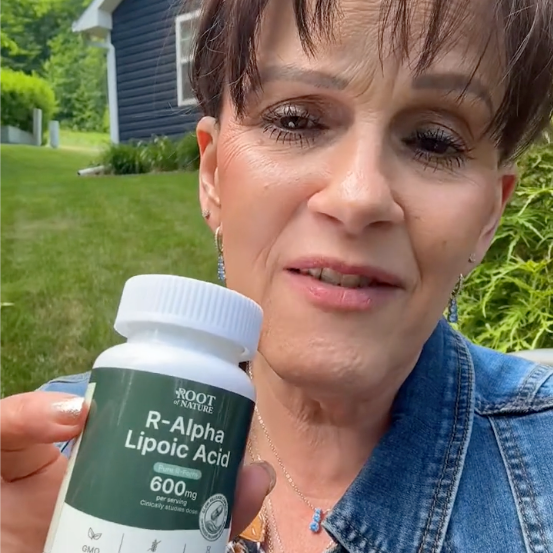
“I’d already changed my diet and was trying to be more active, but I still felt like I had no idea whether anything was actually helping. After adding R-ALA to my routine, I finally felt like I had another piece of the puzzle in place. At my next follow-up, seeing my numbers moving in a better direction was the reassurance I needed. For the first time in a long time, I felt like all the effort I was putting in was actually leading somewhere.”
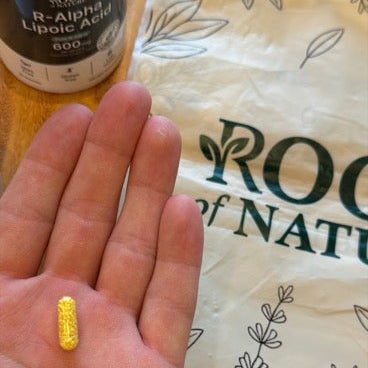
“My doctor kept telling me to lose weight, eat better and come back for another test, so that’s exactly what I did. I cleaned up my diet, started walking every day and added R-ALA because I wanted something that supported more than just the liver itself. Over time I started feeling better overall, and seeing progress at my follow-up gave me a huge sense of relief. It finally felt like I wasn’t just waiting around hoping things would change.”